Introduction: Why Your Manufacturer Choice Defines Your Brand
Every successful hair care brand starts with a single, critical decision: choosing the right manufacturer. A reliable shampoo manufacturer doesn't just fill bottles — they safeguard your formulation IP, maintain batch-to-batch consistency, navigate international compliance, and often become a silent R&D partner as your product line evolves. Conversely, the wrong choice can result in unstable formulations, missed launch deadlines, regulatory nightmares, and irreparable brand damage.
The global shampoo market is projected to surpass $38 billion by 2028, with private label and contract-manufactured brands capturing an increasing share. This growth has attracted both world-class facilities and opportunistic middlemen. In 2026, knowing how to distinguish between the two is more important than ever.
1. Define Your Manufacturing Model First
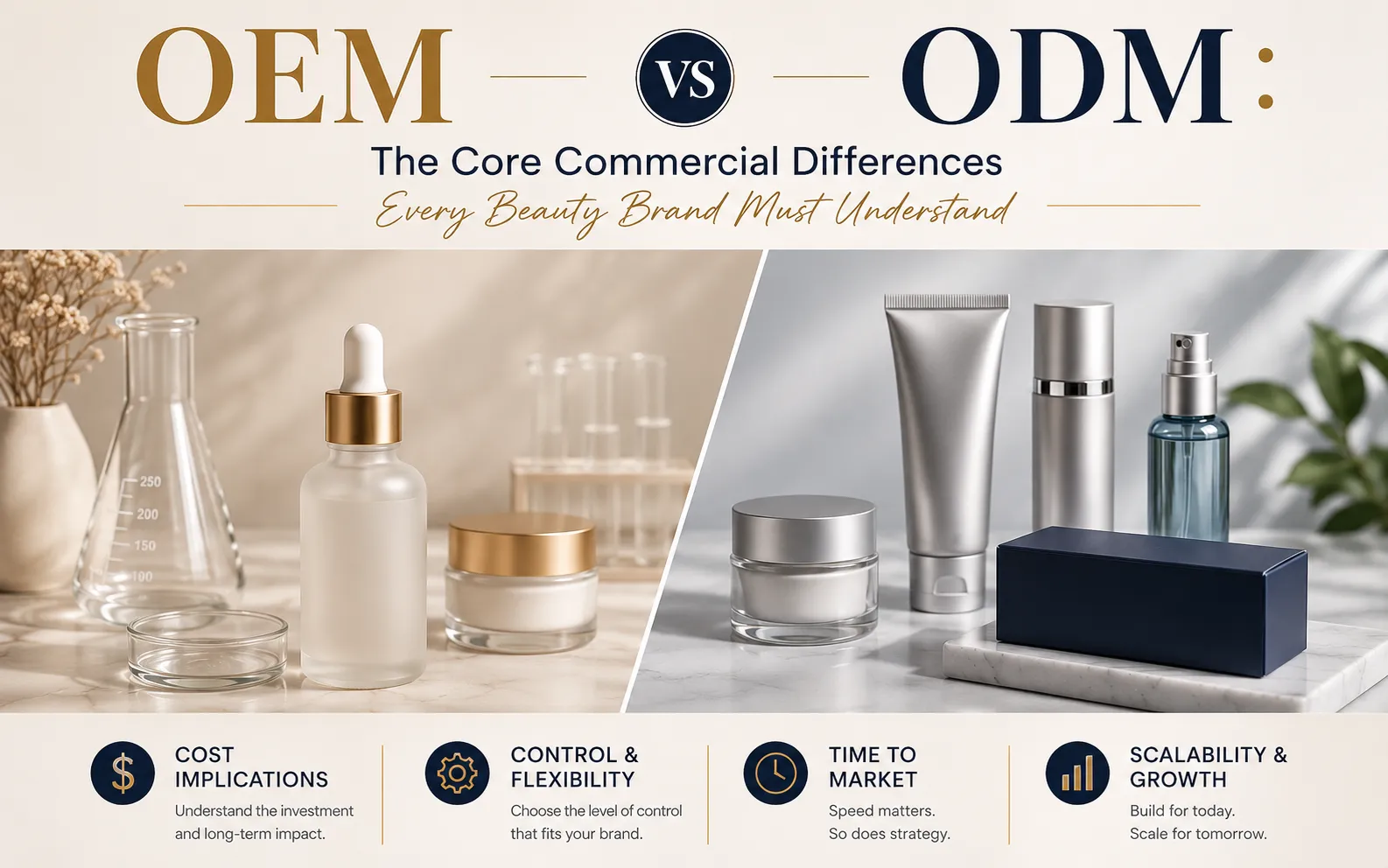
Before contacting any factory, clarify your sourcing model. Are you looking for OEM manufacturing — where you provide the formulation, packaging specifications, and brand identity — or ODM manufacturing — where the factory offers pre-developed formulas that you customize and brand as your own? Understanding this distinction is foundational to your search. For a deeper dive into the commercial differences between these two approaches, read our detailed comparison: OEM vs ODM: The Core Commercial Differences.
Key questions to answer at this stage:
- Do you have a proprietary formula, or do you need R&D support?
- What are your target market's regulatory requirements (FDA, EU Cosmetics Regulation, ASEAN)?
- What is your realistic minimum order quantity (MOQ) budget?
2. The 7-Point Factory Audit Checklist
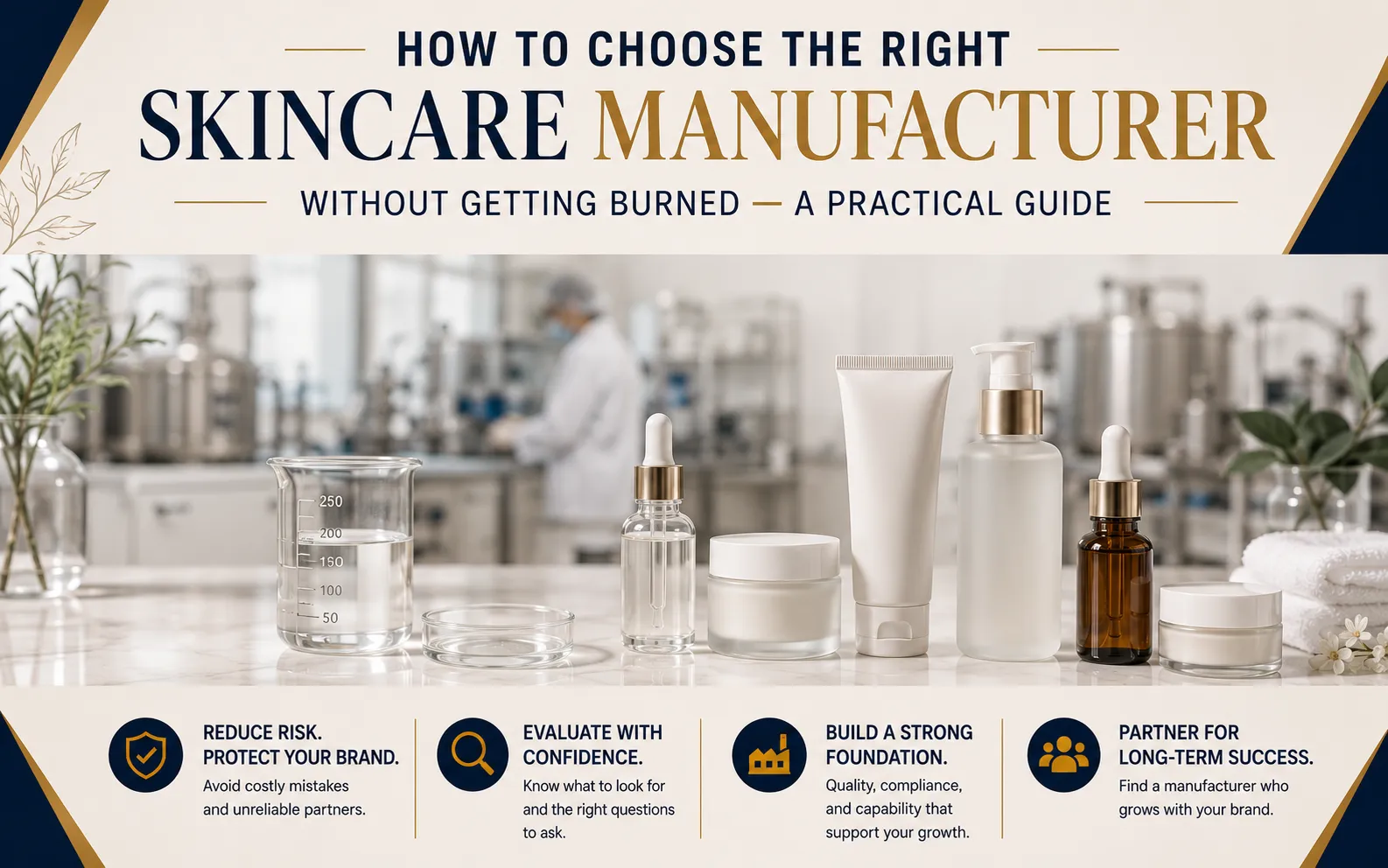
When evaluating a shampoo manufacturer — whether through a virtual tour, third-party audit, or on-site visit — assess these seven areas systematically:
2.1 Certifications & Compliance
ISO 22716 (GMP for cosmetics) is the baseline. Depending on your market, also verify FDA registration, EC Certificate for EU compliance, Halal certification for Southeast Asian markets, and organic certifications (ECOCERT, COSMOS) if applicable.
2.2 Water Treatment System
Shampoo is 70–80% water. The factory's water purification infrastructure — reverse osmosis, deionization, UV sterilization — directly determines microbial stability and product shelf life.
2.3 Emulsification & Homogenization Capacity
Ask about their homogenizer specifications (rotor-stator vs. high-pressure), batch size range, and whether they handle both cold-process and hot-process formulations. A factory limited to one method restricts your formulation options.
2.4 Raw Material Sourcing & Testing
Request their approved supplier list and incoming QC protocols. Top manufacturers test every raw material batch for identity, purity, and microbial load before acceptance. Traceability back to the raw material lot number is non-negotiable.
2.5 Filling & Packaging Capabilities
Can they handle your desired formats — bottles, tubes, sachets, airless pumps? Do they offer in-house labeling, shrink-sleeving, and cartoning? Each outsourced step introduces delay and quality risk.
2.6 Stability & Compatibility Testing
A reliable manufacturer conducts accelerated stability testing (40°C / 75% RH for 3 months), freeze-thaw cycling, and packaging compatibility testing as standard — not as an optional upsell.
2.7 Quality Control Documentation
Every production batch should generate a Certificate of Analysis (CoA) documenting viscosity, pH, specific gravity, microbial limits, and organoleptic properties against your agreed specifications.
3. Red Flags That Should Make You Walk Away
- Unusually low MOQs with no explanation — Genuine manufacturers with in-house production have minimum batch sizes dictated by vessel capacity. A factory offering 50-piece MOQs is likely a trading company.
- Refusal to share factory address or allow audits — Any legitimate manufacturer welcomes transparency.
- No in-house R&D team — If they can't show you their lab, they can't support formulation adjustments.
- Vague pricing that changes without formulation changes — Price stability reflects professional raw material procurement.
- Pressure to pay 100% upfront — Standard terms are 30% deposit, 70% before shipment, or LC at sight.
4. The Chemistry Conversation: Test Their Technical Depth
A genuine shampoo manufacturer should be able to discuss formulation chemistry intelligently. During your initial calls, ask:
- "What surfactant system do you recommend for a sulfate-free formula, and why?"
- "How do you address viscosity building in silicone-free conditioners?"
- "What preservative system do you recommend for our target pH range?"
Their answers — or inability to answer — reveal whether you're speaking with a manufacturer or a middleman. For an example of what a well-formulated product looks like, explore our Sulfate-Free Keratin Shampoo Private Label Guide.
5. Commercial Terms: Beyond the Unit Price
Price per piece is the headline, but the real cost includes:
| Cost Factor | What to Check |
|---|---|
| Tooling & plate fees | Are they amortized over first order? |
| Packaging sourcing | Factory-managed or self-sourced? |
| Freight & logistics | FOB vs. CIF vs. DDP responsibility |
| Payment terms | T/T, LC, or installment structure |
| Defect rate policy | What's the guaranteed acceptable quality limit (AQL)? |
6. Building a Long-Term Partnership
The best manufacturer relationships evolve beyond transactional. Look for partners who proactively suggest cost-optimized ingredient substitutions, alert you to upcoming regulatory changes in your target markets, and invest in sustainability certifications that align with your brand values. A factory that grows with you is worth far more than the lowest unit price.
Conclusion
Finding a reliable shampoo manufacturer in 2026 requires diligence, technical literacy, and a clear understanding of your own brand requirements. Start by defining your manufacturing model, systematically audit candidates against the seven-point checklist, and never compromise on transparency. The right partner isn't just a supplier — they're the foundation your brand is built on. For further reading on protecting your hair in between salon visits, see our Deep Repair Hair Mask Treatment Guide.
Ready to start sourcing? Explore our OEM/ODM product line or contact our team for a confidential consultation.